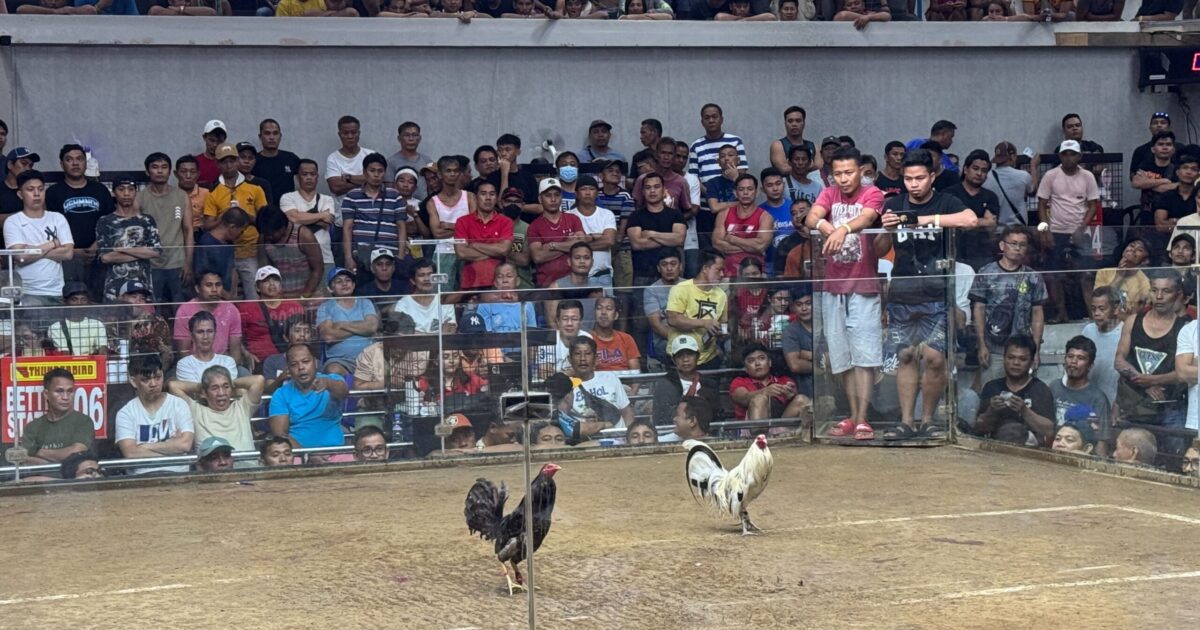
When visiting the Philippines, many people are surprised by the culture of “Cockfighting (Sabong).”
You might find it a bit strange at first, wondering, “Fighting chickens? And betting on them?”
Sabong is a traditional entertainment in the Philippines with a long history, and it is still loved by many people today.
In this article, we will introduce the basics of the Philippine cockfighting “Sabong”—from what it is, to the rules, how to bet, and the actual atmosphere—in an easy-to-understand way for beginners.
What is the Philippine Cockfighting “Sabong”?
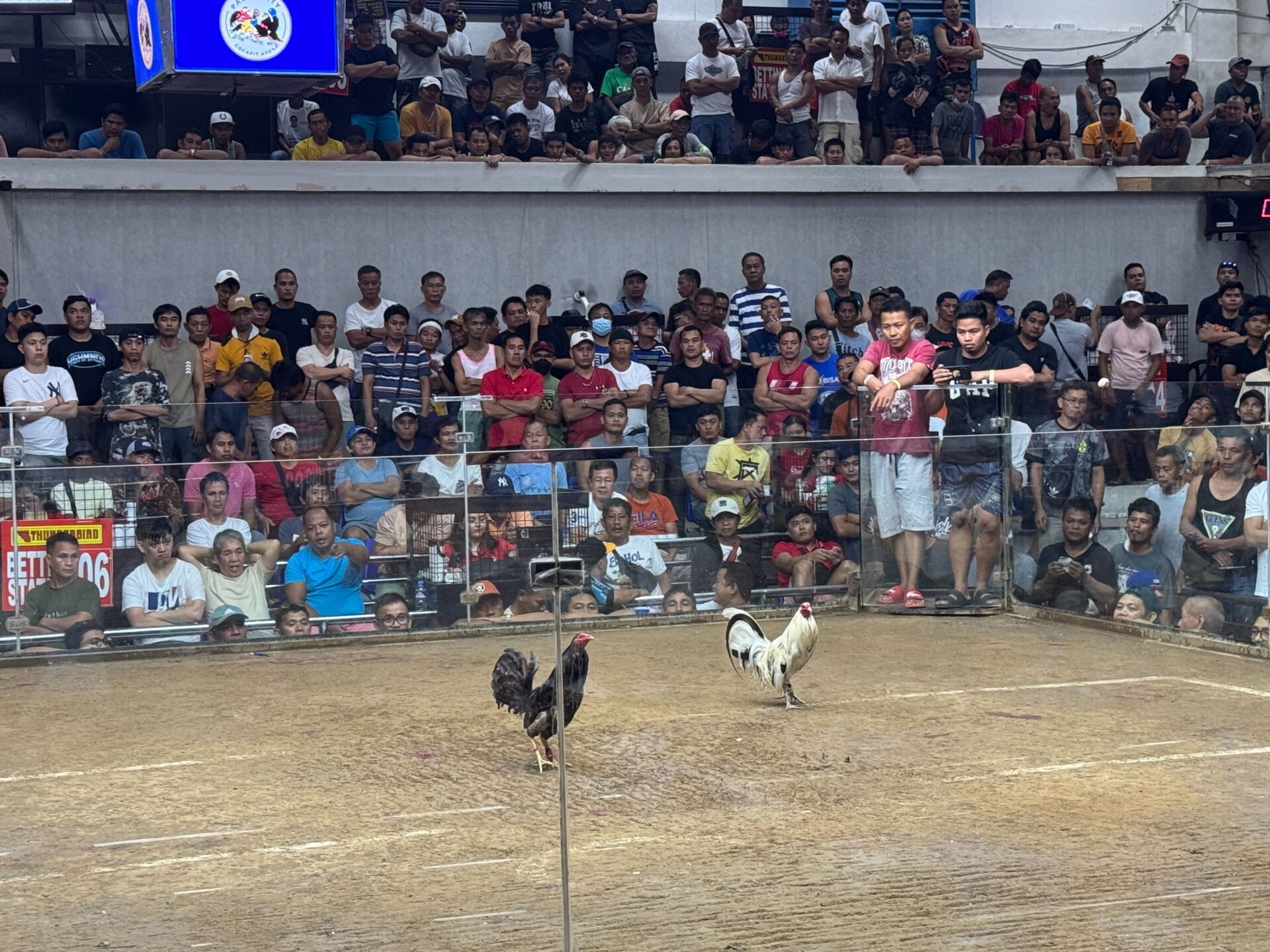
Before heading to the cockpit arena, it is essential to have some basic knowledge of what Sabong actually is. The level of excitement you experience on-site will be completely different if you understand what they are risking their lives for, rather than just watching without knowing the rules or background.
The “Tari” (Blade) Tied to the Leg and the Rules of Settlement
The biggest feature of Philippine Sabong is that the chickens are made to fight with a highly sharp razor blade called a “Tari” attached to their left leg. This blade is about 5 to 7 centimeters long and is so sharp that even a slight touch can slice cleanly through the skin.
A battle with a Tari is not like a movie with flashy splatters of blood. The razor-sharp blade brings a fatal wound quietly and surely. In most cases, the match is decided in a few seconds to a few minutes, and the moment one collapses, the crowd’s cheers explode. The winning chicken does not roar in triumph but simply stands quietly in the ring, which ironically highlights the raw reality of this serious battle.
The criteria for winning and losing are very clear and brutal.
- Causing the death of the opponent’s chicken.
- If the opponent loses the will to fight or both are unable to move, the referee (Sentensyador) brings the two birds close together, and the one that pecks back is declared the winner.
Rarely, both chickens may die at the same time, or neither may peck back until the end. This state is called “Empate” (Draw), and all bets are returned exactly as they are by the house.
Before entering the ring, the chickens flap their wings beautifully and crow proudly. However, once the fight is over, one usually lies on the cold dirt, and even the winner often suffers deep wounds. The intense drama born from scattering lives is exactly what captivates the hearts of the Filipino people.
Why Are Filipinos So Passionate About Sabong?
Some Filipino men spend a large portion of their salaries on chicken feed, vitamins, and training equipment. Their passion for Sabong is so extreme that it is jokingly said, “They might not keep their wives happy, but they always keep their chickens happy.”
The Deep Connection Between Filipinos and Sabong
- It is the greatest entertainment for the poor and in rural areas where there are few other amusements.
- Many men leave their families on weekends just to go to the cockpit arena.
- It has become a massive industry as a legal gamble recognized by the government.
Matches held at official, state-licensed cockpits are completely legal, and it is not uncommon for mayors and local prominent figures to be the owners. From politicians to tricycle drivers, people look at the same ring and get just as excited, transcending class and wealth gaps. That is the greatest charm of the Sabong culture.
Watch it Live! Cockpits Around Manila and How to Enjoy Them
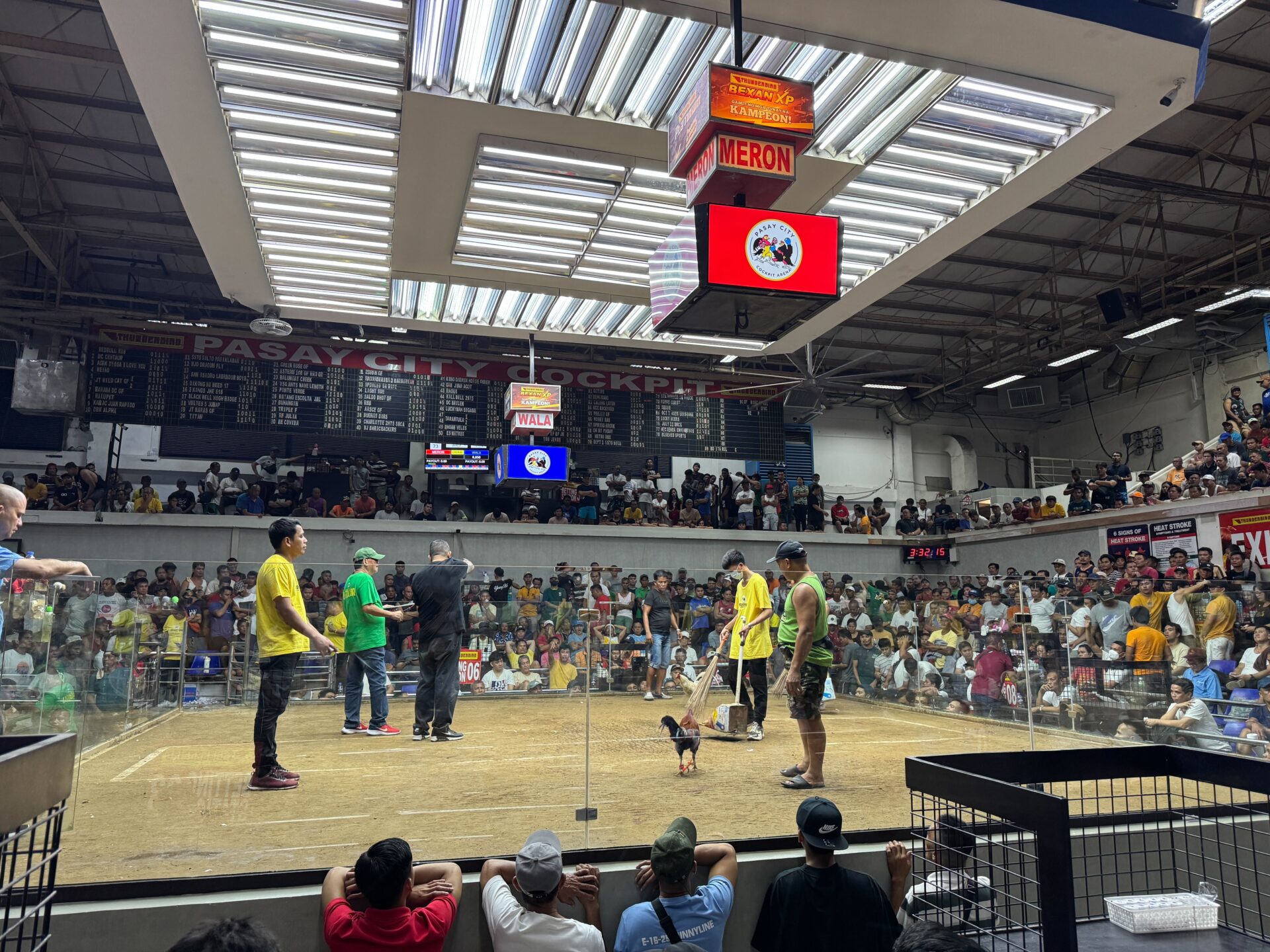
Watch it Live! Cockpits Around Manila and How to Enjoy Them
Now that you understand how Sabong works and how to bet, let’s actually visit the site. There are countless cockpit arenas all over the Philippines, but places that are too local can be challenging for foreigners, and many facilities have closed down in recent years.
Here, we will introduce a reliable spot that is relatively easy for foreigners staying in Metro Manila to access and safely enjoy the excitement, along with tips for a comfortable viewing experience.
The Recommended Cockpit for Foreigners is “Pasay City Cockpit”
If you want to watch cockfighting around Manila, it is a strict rule to choose a famous, large arena with good facilities. Pick a place that is easy to tell a taxi driver and where it is easy to catch a ride-hailing app like Grab on the way back.
As many cockpits have disappeared due to the pandemic and recent regulations, this is currently the representative venue where foreign travelers can visit with the most peace of mind.
Representative Large Cockpit in Metro Manila
- Pasay City Cockpit | Close to Ninoy Aquino International Airport and Makati, with excellent access. If you want to see a cockfight in Manila right now, this is the most reliable place. Because of its large scale and the occasional foreign visitors, it is the most recommended venue for beginners.
In a large venue like the Pasay City Cockpit, large-scale tournaments called “Derbies” are regularly held, and you may even witness moments when astronomical prize money of millions of pesos changes hands.
[Highly Practical] The Complete Manual on How to Bet and Play Sabong
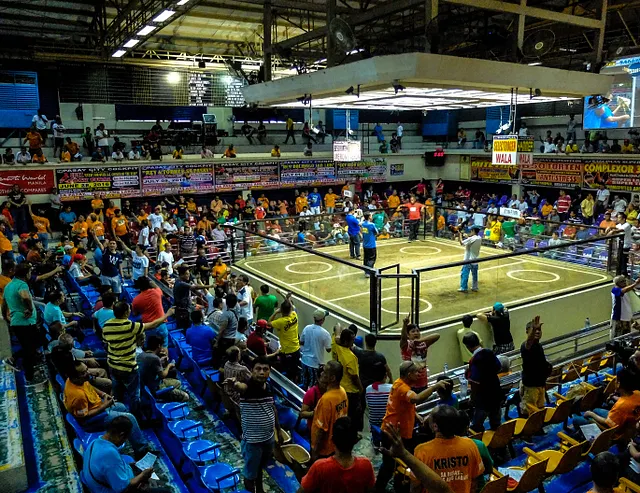
When you sit in the spectator seats of the cockpit arena, you will be overwhelmed by the deafening roars and heat of the men. Here, we will explain the highly practical steps for us foreigners to actually bet and play Sabong while mixing in with the local Filipinos.
Once you understand how it works, you too will be able to safely enjoy the thrilling matches amidst this whirlwind of frenzy.
Identify at a Glance! How to Tell “Meron” and “Wala” Apart by the “Tape” on Their Legs
Betting in Sabong is a 50/50 choice predicting which of the two chickens entering the ring will win. Locally, they are not called Red and Blue, but “Meron” and “Wala” in Tagalog.
To ensure the spectators in the cockpit can instantly tell them apart, these two birds actually have a very obvious physical marker attached to them.
Look at Their Feet! The Difference Between Meron and Wala
- Meron | The chicken with a “tape (band)” wrapped around its leg. Just as it means “there is” in Tagalog, the one with the tape is the favorite (the owner’s chicken).
- Wala | The chicken with nothing wrapped around its leg. Just as it means “there is none” in Tagalog, the one without the tape is the underdog (the challenger’s chicken).
Before the match, when the chickens stare each other down in the center of the ring, even if you don’t know their pedigree or physique, anyone can easily tell which is Meron and which is Wala simply by looking at their feet to check “whether there is tape or not.”
Get a Receipt at the “Official Window” Inside the Arena
In government-certified, modern, large arenas like the Pasay City Cockpit, a systematic method has been established so that even foreigners and beginners can bet with peace of mind.
Inside the arena (just outside the ring or in the hallways), there are official betting windows (counters) called “Center Bets.”
Safe and Official Betting Method for Beginners
- Go to the official window (counter) inside the arena.
- Tell the staff whether you want to bet on “Meron (with tape)” or “Wala (without tape),” and the amount.
- When you pay in cash upfront, the computer will issue a “receipt (ticket)”.
- If you win, you can take that receipt to the window to receive your payout (cash).
Since everything is managed by a system and you always have a receipt proving your payment, there will absolutely never be any trouble over “paid vs. not paid.”
Basically, you pay at the official window, but since you might be sitting in your seat, try asking someone standing nearby. We don’t know if they are official staff or just ordinary people looking for a tip, but they will teach you everything from how to bet to which one looks stronger. It’s endless to give a tip every time, so just give them a tip at the very end.
How Much Do You Get If You Win? How Payouts (Odds) Are Determined
When the chicken you bet on wins, how much will you get back in your hands? In Sabong, the way payouts (odds) are determined is completely different between the “official window” and “personal bets in the spectator seats.”
In the case of the arena’s official window (Center Bet) used by beginners, the system is similar to typical pari-mutuel betting.
The Payout System of the Official Window (Center Bet)
- The organizer’s commission (called Plasada, about 10 percent) is deducted from the total betting pool collected.
- The remaining amount is distributed among the winners, so the odds are calculated automatically and displayed on the monitors in the venue.
- The favorite (Meron), which attracts more popularity, has lower payouts, and if the challenger (Wala) wins, the payout is higher.
For example, if you bet 1,000 pesos when the odds displayed on the monitor are “2.0” and win, 1,900 pesos (900 pesos pure profit) will return to your hands including the principal. By the way, small fractions are cut off.
Because the payouts are visualized on the monitors, even foreigners can bet with peace of mind.
Side Bets in the Seats Are Decided by “Mutual Agreement”On the other hand, the monitor’s odds have nothing to do with the side bets made locally among the spectators in the seats. There is also a unique ratio negotiation called “Logro” in the local language, but basically, there are many 1-on-1 flat bets where someone says, “I’ll bet 1,000 pesos on Meron, so you take 1,000 pesos on Wala.” Since no commission is deducted like at the official window, the appeal of a side bet is that you can take the opponent’s cash entirely if you win. However, for beginners who do not know the market rates, the most reliable way is to first use the official window where payouts can be checked on the monitor.
Precautions for Playing Safely at the Cockpit | Beware of Pickpockets!
Even though it is a legal gamble recognized by the government, the cockpit is a chaotic gambling den where large sums of money fly around. To safely enjoy the experience mixed in with the locals, you must absolutely adhere to the “crime prevention awareness” and “unspoken rules” common on the streets of the Philippines.
There is no dress code for the cockpit, but the best self-defense is to dress in a way that does not make you look like a “foreigner with a lot of money.”
Leave all brand-name bags, watches, and flashy accessories at the hotel. Casual clothes that blend in with the locals, such as T-shirts, shorts, and sneakers, are the most appropriate.
Also, because the venue is crowded and the spectators’ attention is concentrated on the ring due to the betting frenzy, it becomes a perfect hunting ground for pickpockets.
Iron Rules for Bringing Money to the Cockpit
- Do not bring a wallet; put your cash directly into your front pants pocket.
- Do not show off wads of 1,000-peso bills in public (prepare plenty of 100-peso and 500-peso bills).
- Do not take out your smartphone more than necessary, and pay attention to your surroundings when taking photos.
Summary | Spice Up Your Manila Sightseeing! Experience the Deep Heat of Sabong
The national sport of the Philippines, where men’s pride and massive amounts of money clash: “Sabong” (Cockfighting). The ring where blood and sweat scatter, the earth-shattering roars, and the exchange of finger signs woven by the bookmaker (Cristo) and the spectators are truly the ultimate entertainment you can’t easily find anywhere else.
If you feel that just touring standard sightseeing spots and playing in the nightlife districts is not enough, by all means, visit a cockpit arena during the daytime on a weekend while staying in Manila.
You might be overwhelmed at first, but if you understand the rules and join in the betting even with just a few hundred pesos, you too can become a part of the local frenzy. Peer into the abyss of the Philippine local culture and experience the thrilling, serious battles with your own skin.